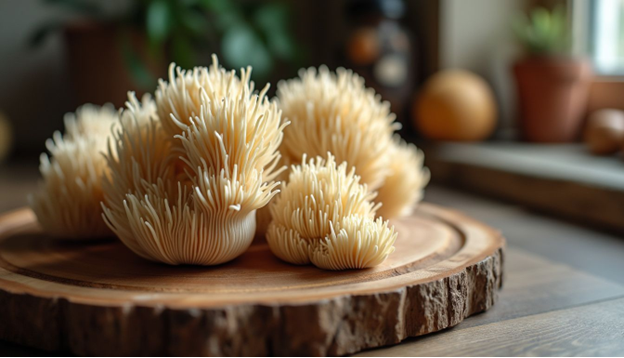
Feeling foggy or forgetful can really ruin your day. Maybe you’re searching for natural ways to boost your brainpower and mood. Lions Mane Mushrooms Fungal Friend could be the answer you’re looking for.
These unique fungi are not just a food but also a powerful supplement with many health benefits.
Health Benefits of Lion’s Mane Mushrooms
Lion’s Mane mushrooms support cognitive health and may help relieve symptoms of depression and anxiety. They also aid in nervous system recovery, protect against digestive ulcers, reduce the risk of heart disease, manage diabetes symptoms, and have potential anti-cancer properties.
Supports cognitive health
Lion’s mane mushroom supports cognitive health by enhancing memory and focus. Studies show that consuming this edible fungi can stimulate the growth of brain cells, contributing to neuroprotective properties.
This is crucial for preventing mental decline and ensuring optimal brain function as one ages. Its natural compounds have been linked to improved nerve growth factor (NGF) levels, which are vital for brain wellness.
Helps relieve symptoms of depression and anxiety
Lion’s Mane mushrooms have been found to help alleviate symptoms of depression and anxiety. Studies suggest that the compounds in Lion’s Mane mushrooms may positively impact mental health by promoting nerve growth factor (NGF) synthesis, which is crucial for brain health.
Additionally, Lion’s Mane contains bioactive substances that can reduce inflammation and oxidative stress in the body, potentially contributing to a more balanced mood and reduced feelings of anxiety.
Aids in nervous system recovery
Lion’s Mane mushrooms have been found to aid in nervous system recovery, promoting the growth and repair of nerve cells. Research suggests that the bioactive compounds in Lion’s Mane can enhance nerve growth factor (NGF) production, which is crucial for supporting and regenerating nerve cells.
This makes it an exciting potential natural remedy for conditions related to nervous system damage or degeneration. Incorporating Lion’s Mane mushrooms into your diet may offer a promising way to support overall nervous system health and recovery.
By incorporating Lion’s mane supplements or adding this mushroom into meals, individuals could potentially improve their nervous system function and support recovery naturally without relying solely on pharmaceutical interventions.
Protects against digestive ulcers
Lion’s Mane mushrooms may offer protection against digestive ulcers, thanks to their anti-inflammatory and antioxidant properties. Research suggests that the bioactive compounds in Lion’s Mane can help reduce inflammation in the stomach lining, potentially preventing the formation of ulcers.
Reduces risk of heart disease
Lion’s mane mushrooms can play a vital role in reducing the risk of heart disease. Research has shown that lion’s mane mushrooms contain compounds that help lower cholesterol levels and reduce the risk of plaque buildup in arteries, which are significant contributors to heart disease.
Moreover, the anti-inflammatory and antioxidant properties of lion’s mane mushrooms contribute to overall heart health by preventing oxidative stress and inflammation, both of which are linked to an increased risk of heart disease.
Manages diabetes symptoms
Lion’s mane mushrooms have been shown to assist in managing diabetes symptoms. Studies suggest that the bioactive compounds in lion’s mane mushrooms may help regulate blood sugar levels, making it a potential ally for those with diabetes.
Additionally, research indicates that lion’s mane mushrooms could play a role in improving insulin sensitivity and reducing inflammation associated with diabetes, further promoting better blood glucose control.
May have anti-cancer properties
Lion’s Mane mushrooms are being researched for their potential anti-cancer properties. Studies have shown that the compounds in Lion’s Mane mushrooms may help inhibit the growth of certain cancer cells.
This is attributed to its high levels of antioxidants and immune-boosting properties, which can aid in protecting against oxidative stress, a factor often linked to the development of cancer.
The presence of bioactive substances like polysaccharides and beta-glucans in Lion’s Mane mushrooms also contribute to its potential anti-cancer effects, making it an intriguing subject for ongoing research in the realm of natural remedies and medicinal properties.
Reduces inflammation and oxidative stress
Lion’s Mane mushrooms have been found to reduce inflammation and oxidative stress in the body. This is significant as chronic inflammation has been linked to various health conditions, including heart disease, diabetes, and cancer.
By incorporating Lion’s Mane mushrooms into your diet or taking supplements, you can potentially lower inflammation levels and combat oxidative stress, thus supporting overall health and well-being.
Research on Lion’s Mane mushrooms has shown their potential to reduce markers of inflammation and counteract oxidative stress in the body.
Incorporating these mushrooms into your regular diet may contribute to managing these detrimental processes that can lead to numerous health issues, making it a valuable addition for those seeking natural ways to support their health.
Boosts immune system
Lion’s mane mushrooms have been shown to boost the immune system, enhancing the body’s natural defense mechanisms. This is attributed to their high levels of polysaccharides, such as beta-glucans, which are known for their immune-boosting properties.
Studies indicate that these compounds can help stimulate the activity of white blood cells and enhance the production of key immune system components, helping to protect against infections and diseases.
How to Incorporate Lion’s Mane Mushrooms into Your Diet
Incorporating lion’s mane mushrooms into your diet involves exploring various preparation and cooking methods as well as considering different types of supplements. Understanding potential side effects and safety precautions is essential when adding this unique ingredient to your meals.
Preparing and cooking methods
- Lion’s mane mushrooms can be prepared and cooked in various ways, making it easy to incorporate them into your diet.
- Sautéing slices of lion’s mane mushrooms in olive oil with garlic, salt, and pepper can bring out their natural umami flavor and tender texture.
- Grilling or roasting lion’s mane mushrooms seasoned with herbs such as thyme and rosemary can enhance their earthy taste while creating a crispy exterior.
- Incorporating lion’s mane mushrooms into stir-fries or pasta dishes allows them to absorb the flavors of other ingredients while maintaining their unique texture.
- Adding lion’s mane mushroom powder to smoothies, soups, or sauces provides a convenient way to benefit from their nutritional properties.
Types of lion’s mane supplements
- Lion’s mane mushrooms can be obtained in various supplement forms, including capsules, powders, and extracts.
- Capsules: These are convenient for easy consumption and precise dosage control. They are typically taken with water, and the dosage varies based on individual needs and the specific product.
- Powders: Lion’s mane mushroom powders can be added to smoothies, teas, or other beverages. They offer versatility in how they can be incorporated into one’s diet and may provide a more rapid absorption rate compared to capsules.
- Extracts: This concentrated form of lion’s mane mushroom is often available in liquid or tincture form. It is designed to deliver potent doses of the mushroom’s beneficial compounds.
Source:
https://www.healthline.com/nutrition/lions-mane-mushroom#types